Sealcoating is the most cost-effective way to protect commercial asphalt, but timing matters. Seal too soon and you're wasting money. Wait too long and you're paying for preventable damage. Here's how to find the right schedule for your property.
How Often Should You Sealcoat a Commercial Parking Lot in Ontario?
Commercial parking lots in Ontario should be sealcoated every 2–3 years for standard use. High-traffic lots — retail plazas, grocery stores, medical facilities — benefit from sealcoating every 18–24 months due to accelerated wear from vehicle volume and aggressive winter maintenance. Newly paved lots should wait 6–12 months before first sealcoating to allow full asphalt cure.
For most commercial parking lots in Ontario, sealcoating every 2–3 years is the sweet spot. This frequency keeps the surface protected against water, UV rays, and chemicals without over-applying, which can cause the sealant to become brittle and peel.
Sealcoating Frequency by Lot Type
| Lot Type | Recommended Interval | Reason |
|---|---|---|
| Office parking (low traffic) | Every 3 years | Lower wear; lower de-icing exposure |
| Retail plaza | Every 2 years | High turnover; heavy salt exposure |
| Grocery / pharmacy | Every 18 months | Very high turnover; aggressive winter maintenance |
| Industrial / warehouse | Every 2–3 years | Heavy load but often lower turnover |
| Medical / long-term care | Every 2 years | Accessibility compliance requires good surface |
| Newly paved (first coat) | 6–12 months post-install | Allow full asphalt cure first |
Factors That Affect Your Schedule
Traffic Volume
A high-traffic retail plaza with hundreds of vehicle movements per day will wear through sealcoating faster than a low-traffic office lot. Heavy commercial vehicle traffic (delivery trucks, buses) accelerates wear significantly.
Climate Exposure
Ontario's freeze-thaw cycles are hard on asphalt. Lots that aren't sealcoated allow water to seep into the porous surface, freeze, expand, and crack the pavement. Properties in areas with heavy winter salting also benefit from more frequent sealcoating, as road salt breaks down asphalt binders.
Chemical Exposure
Fuel and oil leaks from vehicles, along with de-icing chemicals, degrade the asphalt binder. Lots near fuel stations or with frequent heavy vehicle traffic should be sealed every 18–24 months.
Sun Exposure
UV rays oxidize asphalt, turning it grey and brittle. South-facing lots or those with no tree cover tend to oxidize faster and benefit from more frequent sealing.
New Pavement: Wait Before You Seal
Newly paved asphalt needs to cure and off-gas for at least 6–12 months before sealcoating. Sealing too early traps oils in the asphalt that need to escape, which can cause the pavement to remain soft and the sealant to peel. Some manufacturers recommend waiting up to 12 months for the first application.
Signs It's Time to Sealcoat
- •The asphalt has faded from black to grey
- •You can see the aggregate (small stones) through the surface
- •Water no longer beads on the surface — it soaks in
- •Small surface cracks (alligator cracking) are developing
- •It's been 3+ years since the last application
Sealcoat Before You Re-stripe
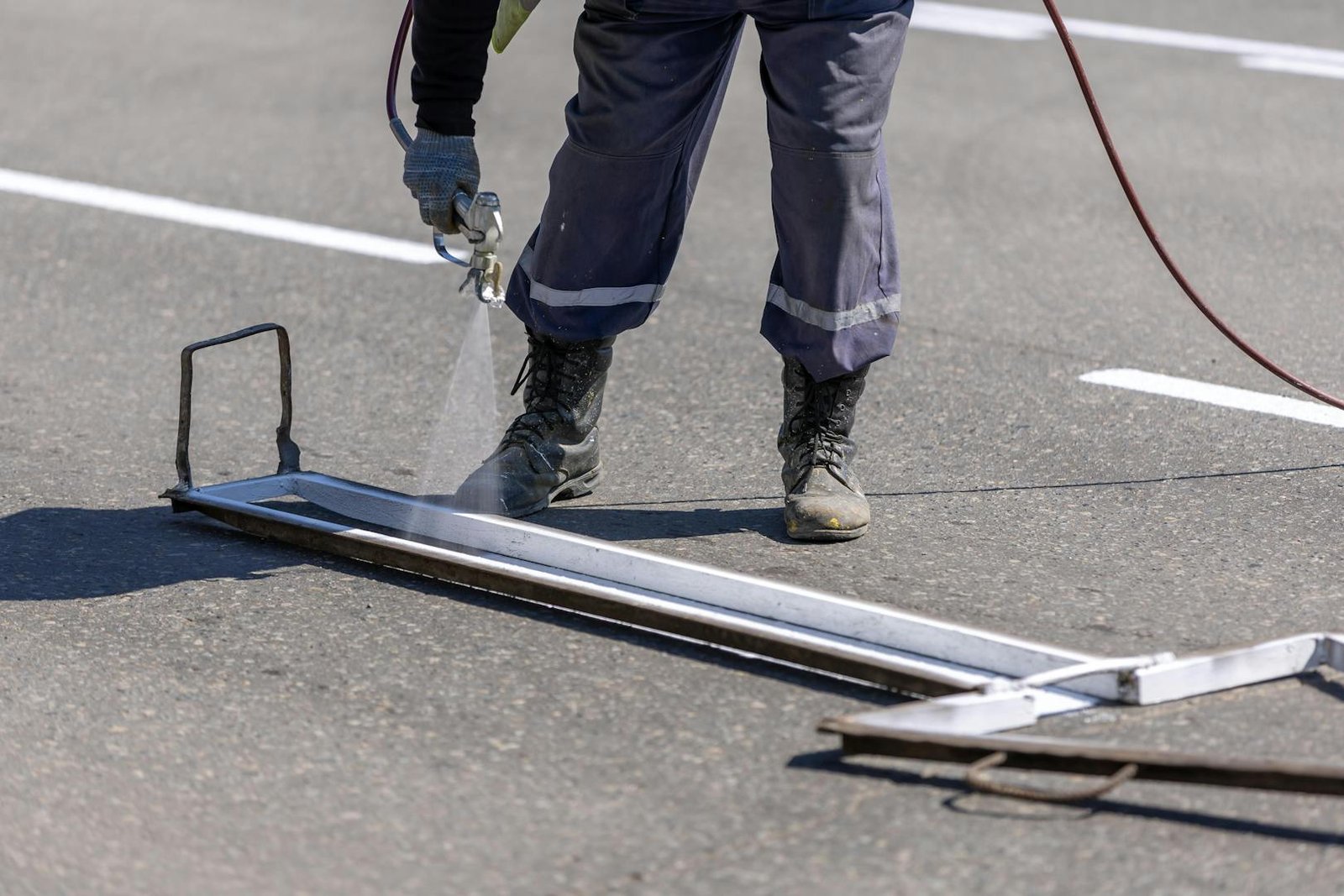
Always sealcoat before re-striping, not after. Fresh sealcoat provides the ideal dark surface for high-contrast line markings. If you re-stripe first and then sealcoat, you'll cover your new lines. We coordinate both services to give your lot a complete refresh in the right sequence.
Not Sure If Your Lot Needs Sealcoating?
We provide free site assessments for Ontario commercial properties.
Get a Free Sealcoating Quote
Serving Cambridge, Kitchener, Toronto, Hamilton & the full 401 corridor.